An effective psychosexual evaluation interview rests on five things: building engagement, using evidence based practices such as Motivational Interviewing, setting clear boundaries, explaining the limits of confidentiality, and seeing the evaluee as a human being rather than an offense. A trauma informed lens improves case conceptualization, rapport, questioning, and listening. The result is more accurate and reliable information, not a softer evaluation.
What Makes a Psychosexual Evaluation Interview Effective?
I recently attended a Safer Society webinar on what makes an effective interview, and I left feeling validated. Much of what was presented reflected what I have learned through years of conducting psychosexual evaluations, in person and now through telehealth.
The webinar affirmed four core elements of an effective forensic interview:
- Building engagement. An evaluee who feels engaged is more likely to share openly and with greater depth.
- Using evidence based practices such as Motivational Interviewing. Motivational Interviewing (MI) offers a respectful, collaborative stance that reduces defensiveness and invites honest reflection.
- Setting clear boundaries. Clarity about roles, purpose, and process creates structure, and structure creates safety.
- Explaining the limits of confidentiality clearly. An evaluee deserves to know, from the start, who will read the report and how the information will be used. This transparency is an ethical obligation and a foundation for trust.
These principles are not soft extras added to a forensic interview. They are what allow the interview to work.
Why Should Evaluators See the Person, Not Just the Offense?
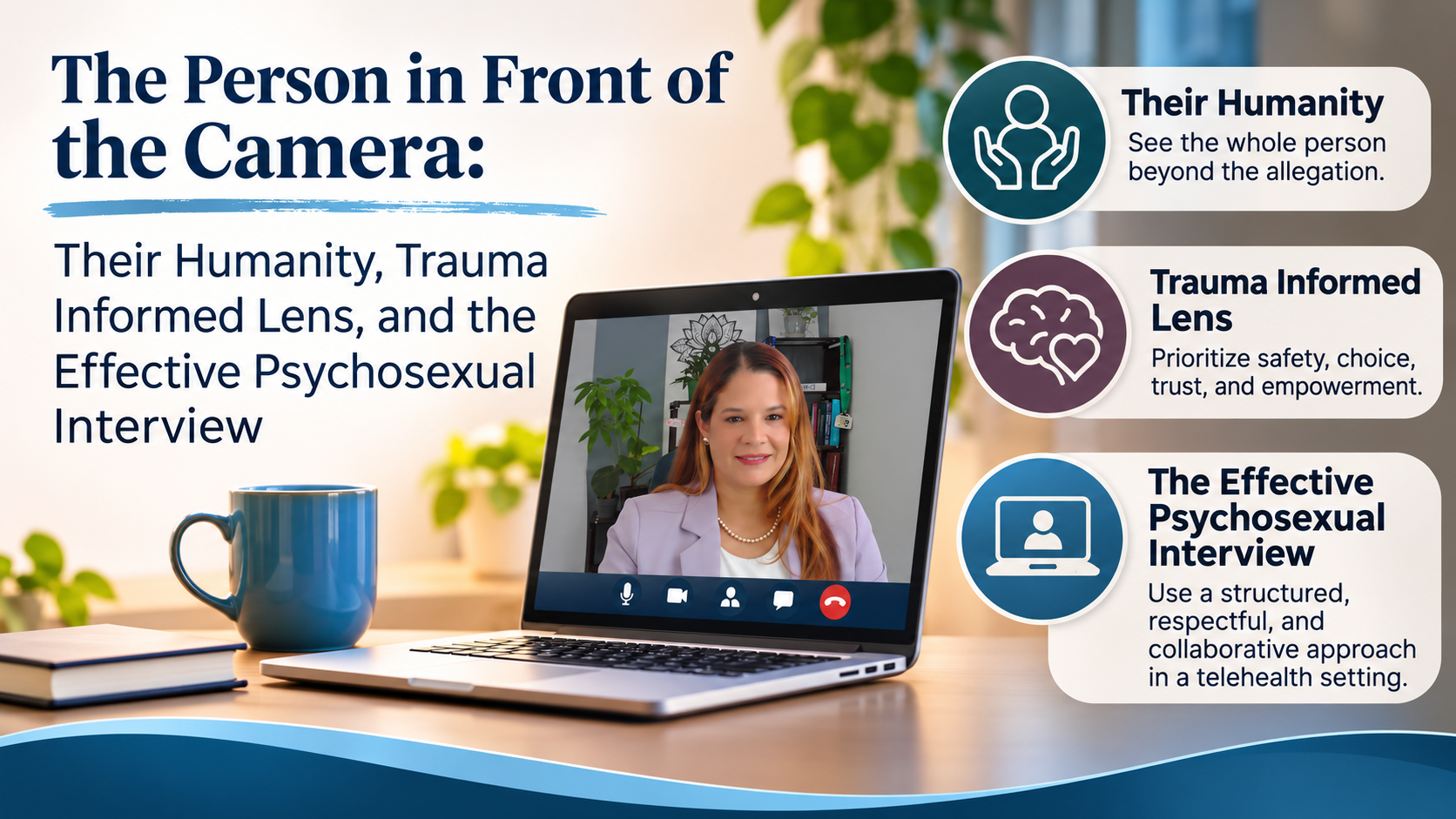
There is one principle I hold onto every time I begin a psychosexual evaluation. The person in front of me, or in front of the camera, is a human being. They are more than the sexual offense that brought them to my office.
This is not about excusing harm or minimizing its impact on victims. Accountability matters, and the evaluation must be thorough, honest, and objective. But when we reduce a person to a charge or a label, we lose sight of the full picture. We miss their history, their development, their relationships, their strengths, and the circumstances that shaped their choices.
A person who feels seen as a person, rather than as a case number, is far more likely to engage honestly. That honesty is exactly what an accurate evaluation depends on.
How Does a Trauma Informed Lens Improve a Psychosexual Evaluation?
Many individuals referred for psychosexual evaluations carry their own histories of trauma, adversity, and loss. A trauma informed approach does not change the purpose of the evaluation. It changes how the evaluator approaches every part of it.
1. Conceptualizing the Case
I look at behavior in context. Understanding how early experiences, attachment, and adversity may have shaped a person’s development helps me form a more complete and accurate clinical picture. The question shifts from “What is wrong with this person?” to “What happened to this person, and how does it connect to where they are now?”
2. Establishing Rapport
Many evaluees arrive anxious, ashamed, or guarded, and often with good reason. Rapport begins with predictability and respect: explaining what will happen, being honest about my role, and treating them with dignity from the first moment.
3. Asking Questions
How I ask matters as much as what I ask. I use a calm, nonjudgmental tone and pace the conversation with care, especially around sensitive topics. I watch for signs that a question has touched something painful, and I give space when it is needed.
4. Listening to the Answers
Listening is where the real work happens. I listen to what is said, what is avoided, and how it is said. I listen with curiosity rather than suspicion, while staying clinically alert. The goal is to understand, not simply to collect information.
Does a Trauma Informed Approach Make an Evaluation Less Objective?
No. In my experience, the opposite is true. A respectful, trauma informed interview produces richer, more reliable information. When evaluees feel less threatened, they tend to be less defensive and more forthcoming. That gives me a clearer basis for my clinical opinions and recommendations.
Remaining neutral and forensic does not require remaining cold. Neutrality is about how I weigh information. Humanity is about how I gather it.
Can Rapport Be Built in a Telehealth Psychosexual Evaluation?
Yes, but it takes deliberate effort. Through a screen, I cannot rely on the same physical cues of presence. I am intentional about warmth, eye contact with the camera, clear explanations, and regular check ins. With that intention, rapport can be built virtually just as meaningfully.
Frequently Asked Questions
What is a psychosexual evaluation?
A psychosexual evaluation is a neutral, forensic assessment of a person’s sexual history, behavior, risk factors, and treatment needs. It is often requested by courts, attorneys, or probation to guide decisions about treatment and supervision.
Why is Motivational Interviewing used in forensic interviews?
Motivational Interviewing reduces defensiveness and encourages honest, reflective conversation. This helps the evaluator gather more accurate information.
Why must evaluators explain the limits of confidentiality?
Evaluees have a right to know who will receive the report and how their information will be used. Clear disclosure is an ethical requirement and builds trust from the start.
What does trauma informed mean in a psychosexual evaluation?
It means recognizing how trauma and adversity may have shaped the evaluee’s life, and adjusting how the evaluator builds rapport, asks questions, and listens, without compromising objectivity.
Can psychosexual evaluations be done through telehealth?
Yes. With intentional rapport building and clear structure, telehealth psychosexual evaluations can be thorough and effective.
About the Author
Gladylu Burgos, LCSW, CSOTP, is the founder of Blossom and Healing Counseling and Consulting, LLC, a fully remote practice specializing in sex offender treatment and psychosexual evaluations via telehealth.